Mace or Mase? Correct Spelling and Usage Explained
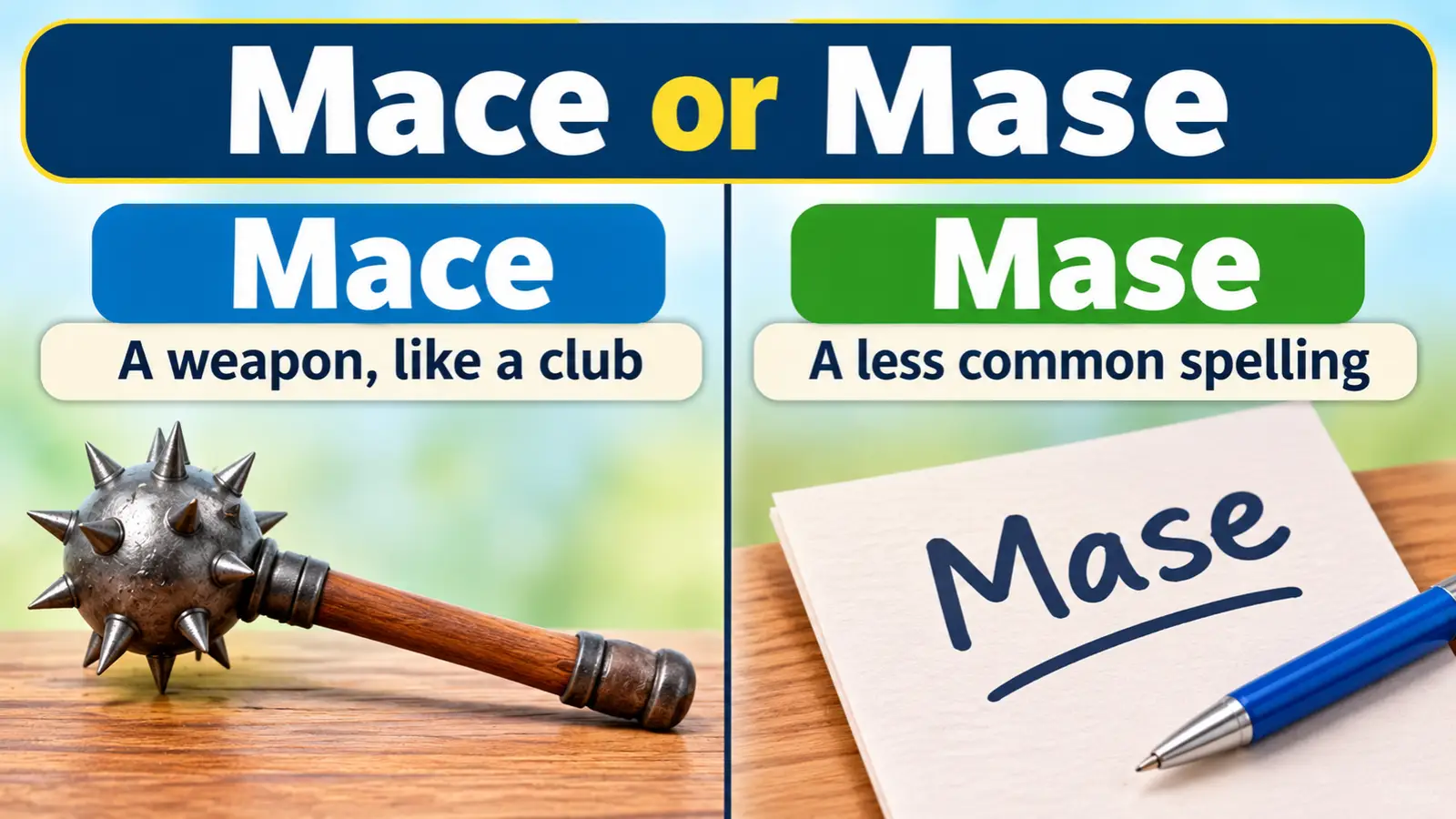
Mace is the standard spelling of the common English noun for a spice, a historical weapon, a ceremonial staff, or a defensive spray. Mase is not a standard alternative spelling of that noun, but it can be correct as a proper name, such as the stage name of the American rapper Mase. The right choice depends on what you mean.
This distinction matters because the two spellings are pronounced alike. A spell-checker may not catch the mistake, so you need to consider whether you are referring to an everyday object or a specific name.
Related Post: A Unique or An Unique
Mace vs. Mase: The Key Difference
| Term | Meaning or status | When to use it | Example |
|---|---|---|---|
| Mace | Standard English noun | For the spice, weapon, ceremonial staff, or defensive spray | The recipe calls for ground mace. |
| Mase | Proper name; not the standard spelling of the common noun | When spelling a person’s name or another established name | Mase released a popular song. |
The forms are not interchangeable when referring to the common noun. Use mace for the spice, weapon, staff, or spray. Preserve Mase when it is part of someone’s actual name.
What Does Mace Mean?
Mace is a noun with several established meanings. The surrounding sentence usually makes the intended meaning clear.
When to Use Mace
Use mace in these contexts:
- Spice: Mace is a spice made from the dried outer covering of the nutmeg seed.
- Historical weapon: A mace is a heavy club, traditionally made with a metal head.
- Ceremonial staff: A mace can be an ornamental staff representing the authority of an official or institution.
- Defensive spray: Mace can refer to a chemical defensive spray. The word is also used as a trademarked product name.
Mace in Example Sentences
- The recipe calls for a pinch of mace.
Here, mace refers to the spice used in cooking. - The museum displayed a medieval mace.
The word describes a historical weapon. - The official carried the ceremonial mace into the chamber.
In this sentence, it represents institutional authority.
Is Mase a Word?
Mase is not the standard spelling of the common noun mace. However, it is used as a proper name, so it should not automatically be treated as a typo in every context.
For example, Mase is the stage name of American rapper Mason Betha. The spelling must remain Mase when referring to the artist.
Examples:
- Mase performed at the concert. The spelling identifies the artist.
- The article discussed Mase’s music career. The name is correctly capitalized.
- The recipe needs mase. If the intended ingredient is the spice, this should be corrected to mace.
How to Choose Between Mace and Mase
The easiest way to choose is to identify the meaning of the word.
- If you mean a spice, weapon, ceremonial staff, or defensive spray, write mace.
- If you mean a person or entity whose established name is spelled Mase, write Mase.
- If you are unsure whether a specialized term or name uses Mase, check the relevant source rather than changing its spelling automatically.
A Quick Test You Can Apply
Ask yourself: Am I naming an object or referring to someone named Mase?
- “The knight carried a ___.” → mace
- “The artist ___ performed live.” → Mase
This meaning-based test is more reliable than choosing by sound because the two forms are pronounced the same way.
Common Mistakes and How to Fix Them
| Original sentence | Corrected sentence | Why it changes |
|---|---|---|
| Add one teaspoon of mase to the recipe. | Add one teaspoon of mace to the recipe. | The spice is spelled mace. |
| The knight carried a mase into battle. | The knight carried a mace into battle. | The historical weapon is a mace. |
| The ceremonial mase was placed on the table. | The ceremonial mace was placed on the table. | The official staff is spelled mace. |
| Mace performed at the event. | Mase performed at the event. | The artist’s stage name uses the spelling Mase. |
Why These Forms Get Confused
The words differ by only one letter and have the same pronunciation. The letter c in mace makes an /s/ sound, which can lead writers to choose s when spelling the word from memory.
Names create another source of confusion. Someone familiar with the name Mase may mistakenly carry that spelling over to the common noun. Remember that pronunciation alone cannot tell you which spelling is correct.
Can You Use Mace and Mase Interchangeably?
No. Mace and Mase have different uses in standard writing.
- Mace: The common noun for the spice, weapon, ceremonial staff, or defensive spray.
- Mase: A spelling used in proper names, including the rapper’s stage name.
Compare these sentences:
- The chef added mace to the sauce. The word names a spice.
- Mase performed the song. The word identifies an artist.
Changing one spelling to the other changes the reference or creates a spelling error.
Common Phrases With Mace
These combinations show how the standard noun appears in different contexts.
| Phrase | When to use it | Original example |
|---|---|---|
| Ground mace | The spice in powdered form | Ground mace gives the baked dish a warm flavor. |
| Mace spice | When identifying the cooking ingredient | Mace spice is sometimes used in baking. |
| Medieval mace | A historical weapon | The exhibit included a medieval mace. |
| Ceremonial mace | A staff representing official authority | The ceremonial mace was displayed during the opening. |
| Mace spray | A defensive spray product | The safety guide described how to store mace spray responsibly. |
Apply the Difference to a Real Situation
A recipe is a useful place to see why the spelling matters.
Original Version
Please add a little mase to the sauce. The recipe says it will give the dish a warm flavor.
Improved Version and Explanation
Please add a little mace to the sauce. The recipe says it will give the dish a warm flavor.
The correction changes mase to mace because the sentence refers to the cooking spice. The intended meaning stays the same; only the spelling changes.
An Easy Way to Remember the Difference
Remember the C in mace for the common noun:
- Mace is the spice, weapon, ceremonial staff, or spray.
- Mase is used when a specific name requires that spelling.
For example, write “Add mace to the recipe,” but preserve the spelling “Mase” when referring to the artist.
Frequently Asked Questions
Is Mase a misspelling of mace?
It is a misspelling when you intend to refer to the common noun mace. However, Mase can be correct as a proper name, so context matters.
Is mace a spice or a weapon?
It can mean either. As a spice, mace comes from the outer covering of the nutmeg seed. As a weapon, it is a heavy club, often with a metal head.
Is Mace a brand name?
Mace is also used as a trademarked name for a defensive spray product. When referring to a specific product, follow the brand’s official capitalization and spelling.
Are mace and Mase pronounced the same?
Yes. Both are generally pronounced /meɪs/, like the word base with an /m/ sound at the beginning. Their spelling and meaning depend on context.
Should Mase always be capitalized?
When Mase is a person’s name or another proper name, capitalize it. Do not use it as a lowercase substitute for the common noun mace.
Which Form Should You Use?
Use mace when writing about the spice, historical weapon, ceremonial staff, or defensive spray. Use Mase when referring to a person or entity whose established name has that spelling.
For ordinary American English writing, mace is the correct form for the common noun. The two spellings sound alike, but they are not interchangeable.
Sources