Drier vs Dryer: How to Choose the Correct Word
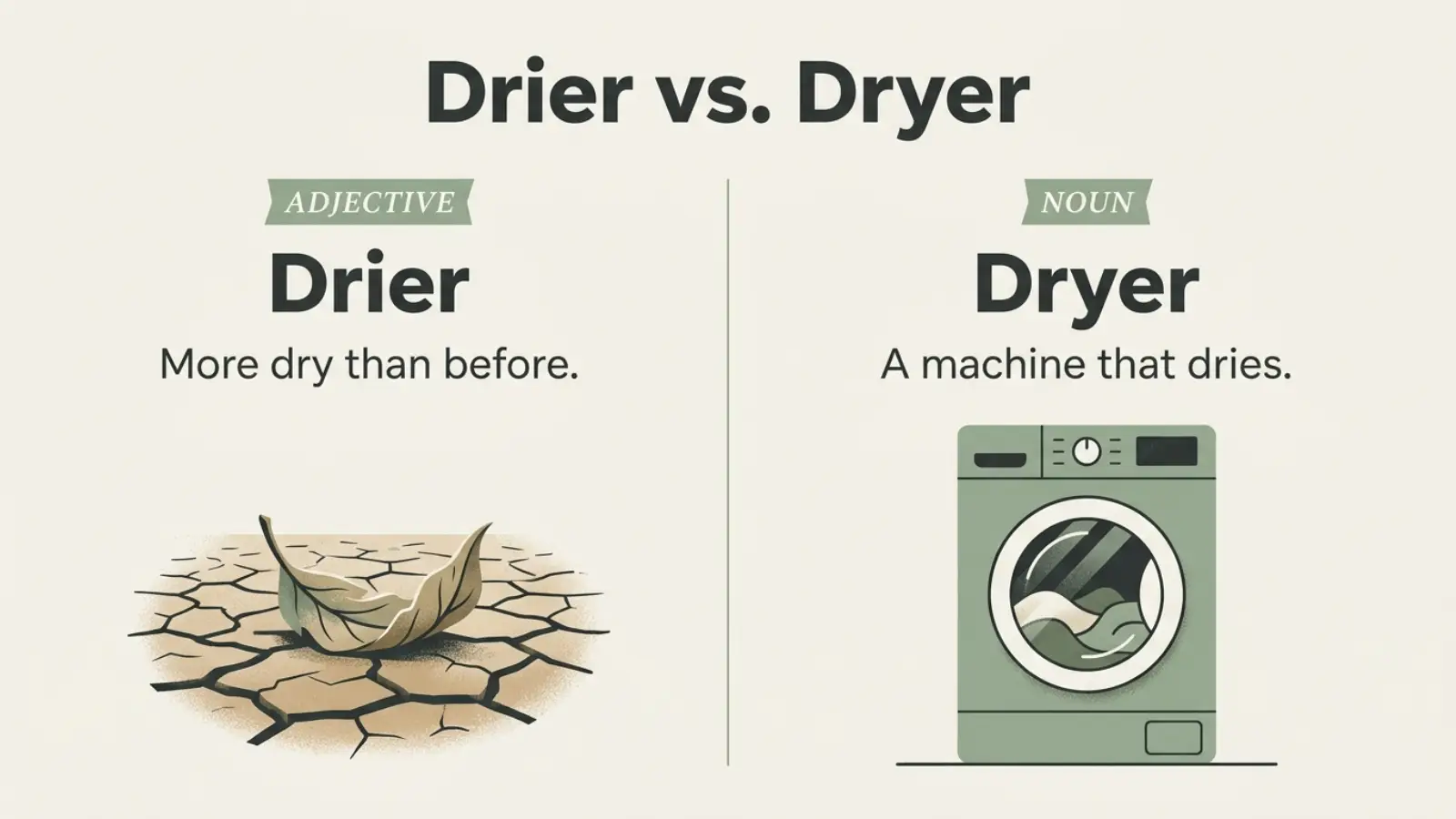
Drier and dryer are both correct English words, but they usually serve different purposes. Drier is the standard comparative form of dry, meaning “more dry” or “less moist.” Dryer usually refers to a machine that removes moisture, such as a clothes dryer or hair dryer. Some dictionaries also recognize drier as an alternative spelling for the machine.
The distinction is useful when writing about weather, skin, laundry, hair care, or household appliances. The easiest rule for everyday American English is: a dryer makes things drier.
Related Post: Per Se vs Per Say
Drier vs Dryer: The Key Difference
| Term | Meaning or status | When to use it | Example |
|---|---|---|---|
| Drier | Comparative form of the adjective dry; also an accepted noun variant for a drying device | When comparing how much moisture something has | The towels are drier now. |
| Dryer | Usually a noun meaning a machine or device that dries something | When naming an appliance or drying machine | Put the towels in the dryer. |
Quick answer: Use drier to describe something that is more dry. Use dryer when referring to a drying machine in ordinary American English.
What Does Drier Mean?
Drier is the comparative form of the adjective dry. It describes something that has less moisture than another thing, or less moisture than it had before.
The comparison can be direct or understood from context:
- The towel is drier than the one on the chair.
- The weather should be drier tomorrow.
- My skin feels drier in winter.
The adjective follows this pattern:
dry → drier → driest
When to Use Drier
Use drier when describing or comparing:
- Weather and climate: drier air, drier conditions, a drier climate.
- Clothing and towels: drier laundry, drier fabric.
- Skin and hair: drier skin, drier hair.
- Soil and plants: drier soil, drier growing conditions.
- Food or materials: a drier mixture or a drier surface.
Drier in Example Sentences
1. The air feels drier today than it did yesterday. The air contains less moisture, or feels that way, compared with the previous day.
2. This towel is drier than the one hanging by the sink. The sentence compares the moisture levels of two towels.
3. My hands get drier during the winter. Here, drier describes a change in the condition of the skin.
What Does Dryer Mean?
Dryer is usually a noun for a machine or device that removes moisture. Common examples include clothes dryers, hair dryers, hand dryers, and grain dryers.
The word names the device, not the condition of the item being dried.
When to Use Dryer
Use dryer when referring to a machine designed to dry something, such as:
- A clothes dryer in a laundry room.
- A hair dryer used after washing your hair.
- A hand dryer in a public restroom.
- A grain dryer used in agricultural processing.
Dryer in Example Sentences
1. I put the wet clothes in the dryer. Dryer names the appliance that dries the clothes.
2. She packed a hair dryer for the trip. The word identifies a device used to dry hair.
3. The restroom has a wall-mounted hand dryer. The sentence refers to equipment that dries people’s hands.
How to Choose Between Drier and Dryer
For most everyday writing, the distinction comes down to the word’s function:
- Drier describes how dry something is.
- Dryer names a machine that dries something.
A Quick Test You Can Apply
Ask yourself: Am I describing moisture, or naming a machine?
Describing moisture? Use drier.
Example: The towels are drier after hanging outside.
Naming a machine? Use dryer.
Example: The towels are in the dryer.
When the Quick Test Does Not Work
The distinction is a useful guideline, not an absolute rule for every dictionary entry. Drier is also accepted as a noun variant meaning a drying device. Some dictionaries also recognize dryer as a less usual spelling of the comparative adjective.
For clear, conventional American English, however, using drier for the comparison and dryer for the appliance helps readers understand your meaning immediately.
Common Mistakes and How to Fix Them
| Original sentence | Corrected sentence | Why it changes |
|---|---|---|
| The weather will be dryer tomorrow. | The weather will be drier tomorrow. | Drier is the conventional comparative adjective. |
| Put the wet clothes in the drier. | Put the wet clothes in the dryer. | Dryer is the usual spelling for a household appliance. |
| I need a new hair drier. | I need a new hair dryer. | Hair dryer is the standard spelling for the device. |
| This towel is more drier than that one. | This towel is drier than that one. | The comparative form already expresses “more dry,” so more is unnecessary. |
The first three examples reflect conventional word choice rather than an absolute claim that the alternative spelling can never occur. The last example is a grammatical correction.
Why These Forms Get Confused
Both words come from dry and are pronounced the same way in standard American English. Their similar spelling and sound make them easy to mix up.
The difference is easier to remember when you connect each spelling with its most common function: drier describes a condition, while dryer names the appliance.
Does the Choice Change With Context?
The basic distinction works in American and British English, although dictionaries may record different preferences or variants. In both varieties, drier is the standard comparative form, and dryer is widely used for the appliance.
For American readers, choose clothes dryer, hair dryer, and hand dryer when naming devices. Use drier for comparisons involving weather, skin, soil, or other things that have less moisture.
Can You Use Drier and Dryer Interchangeably?
Sometimes, but it is better not to do so in ordinary writing. The two spellings overlap in some dictionary entries, yet they have distinct conventional uses.
Compare these examples:
- “The clothes are drier now.” — Describes the condition of the clothes.
- “The clothes are in the dryer.” — Identifies the machine holding the clothes.
Changing the spelling in these sentences would make the intended meaning less clear or sound less conventional.
Common Phrases With Drier and Dryer
| Phrase | When to use it | Original example |
|---|---|---|
| Drier weather | Describing weather with less moisture or precipitation | We expect drier weather by the weekend. |
| Drier skin | Comparing skin with a lower moisture level | Cold air can leave my hands feeling drier. |
| Drier soil | Describing soil with less moisture | The plants need less water in drier soil. |
| Clothes dryer | Naming a machine that dries laundry | The clothes dryer is in the basement. |
| Hair dryer | Naming a device used to dry hair | She unplugged the hair dryer after use. |
Apply the Rule to a Real Situation
Original Version
Hi Alex,
The forecast says we should have dryer weather tomorrow. I’ll wash the towels tonight and put them in the drier before you arrive.
Thanks!
Improved Version and Explanation
Hi Alex,
The forecast says we should have drier weather tomorrow. I’ll wash the towels tonight and put them in the dryer before you arrive.
Thanks!
The first correction changes dryer to drier because the sentence describes weather. The second changes drier to dryer because it names the laundry appliance.
This example shows why context matters: the words sound alike, but their roles in the sentences are different.
Is It Drier or Dryer for Clothes, Hair, and Weather?
The best spelling depends on what you are describing.
| Context | Preferred spelling | Example |
|---|---|---|
| Laundry appliance | Dryer | The dryer finished its cycle. |
| Hair appliance | Dryer | I bought a new hair dryer. |
| Weather comparison | Drier | The forecast predicts drier conditions. |
| Skin condition | Drier | My skin feels drier after swimming. |
| Soil condition | Drier | This part of the garden has drier soil. |
Remember that drier can also appear as a noun variant in dictionary usage. The table gives the clearest conventional choice for everyday American English.
An Easy Way to Remember the Difference
Remember this sentence:
The dryer makes the clothes drier.
- Dryer is the machine.
- Drier describes the clothes after some moisture has been removed.
The same memory aid works for hair: “The hair dryer made my hair drier.”
Practice: Can You Choose the Right Form?
Choose drier or dryer to complete each sentence.
- The desert has a ______ climate than the coast.
- Please move the wet shirts to the ______.
- After the heater ran all night, the indoor air felt ______.
Answers and Explanations
- Drier — It compares the moisture levels of two climates.
- Dryer — It names the appliance used to dry clothes.
- Drier — It describes the air as having less moisture.
Frequently Asked Questions
Is drier or dryer correct?
Both are correct words. Drier is the usual comparative form of dry, while dryer is the usual spelling for a drying machine. Dictionaries recognize some overlap, but this distinction is the clearest choice for most everyday writing.
Is it clothes drier or clothes dryer?
Clothes dryer is the standard, conventional spelling in American English for the appliance. Although drier can appear as a noun variant, clothes dryer is the clearer choice.
Is it hair drier or hair dryer?
Use hair dryer when naming the device. When describing hair that has lost moisture, use drier hair.
Can dryer mean more dry?
Some dictionaries recognize dryer as a variant comparative form of dry. Nevertheless, drier is the conventional spelling for the adjective in standard everyday writing.
How do you remember drier vs dryer?
Think of the sentence “The dryer makes things drier.” The machine is the dryer; the resulting condition is drier.
Which Form Should You Use?
For most American English writing, use drier when comparing moisture levels and dryer when naming a machine. This distinction is easy to apply in everyday sentences, product descriptions, emails, and school assignments.
Sources