
Spicey or Spicy: Which Spelling Should You Use?
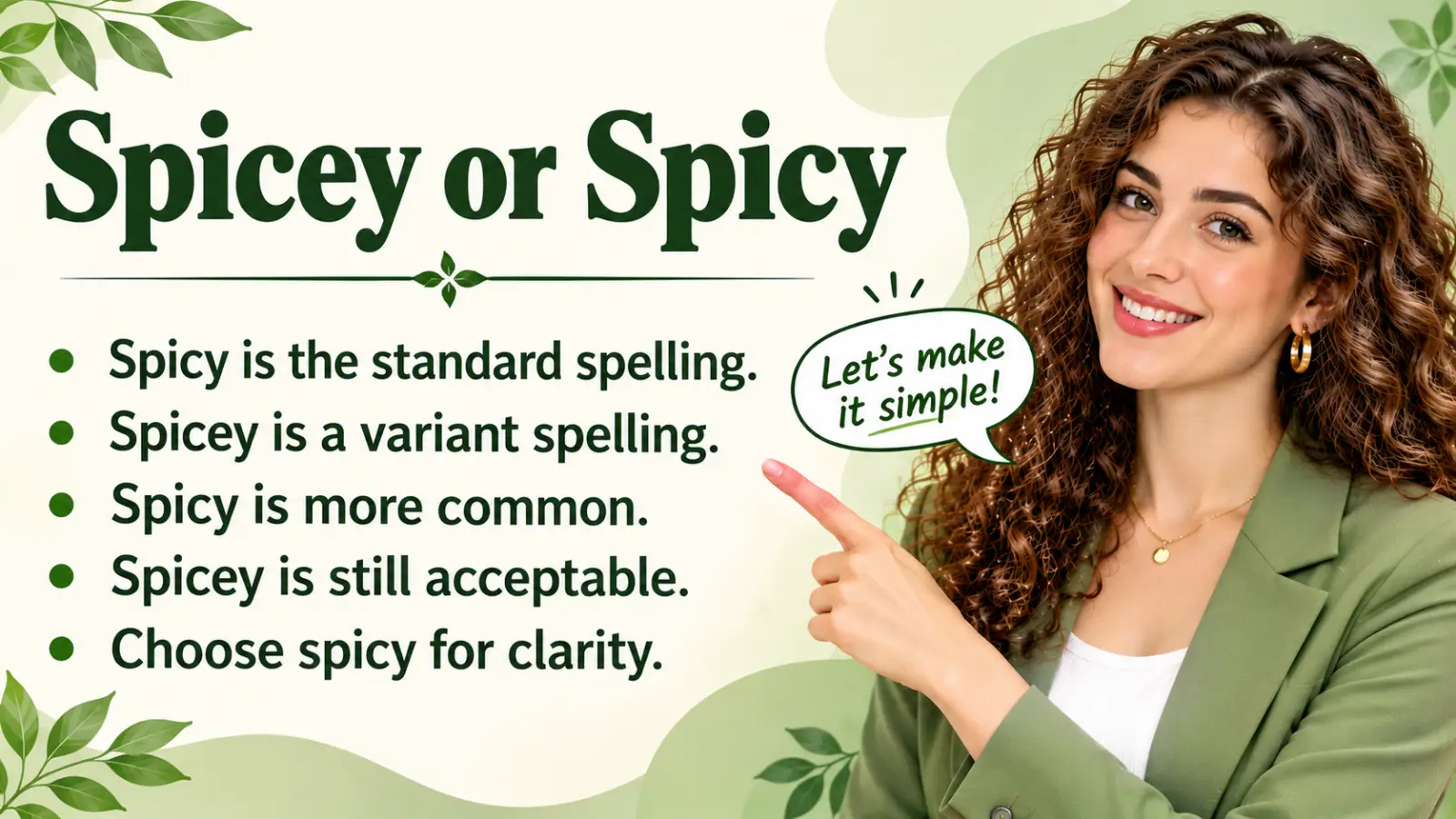
Spicy is the standard spelling to use in modern American English. Spicey is also recorded as a variant spelling in some dictionaries, so it is not accurate to call it nonexistent. However, spicy is the form readers generally expect in everyday writing, recipes, menus, school assignments, and professional content.
The two spellings have essentially the same meaning when used as adjectives. The practical difference is that spicy is the preferred modern form, while spicey is a less common variant.
Related Post: Their vs. There vs. They’re
Spicey vs. Spicy: The Key Difference
| Term | Meaning or status | When to use it | Example |
|---|---|---|---|
| Spicy | Standard modern spelling | Everyday, academic, and professional writing | The salsa is spicy. |
| Spicey | Recorded variant spelling of spicy | Usually avoid it unless preserving an original spelling or name | The older text describes a spicey sauce. |
For contemporary American English, choose spicy. Although some dictionaries recognize spicey as a variant, it is not the usual spelling in edited writing.
What Does Spicy Mean?
Spicy is an adjective that commonly describes food with a strong flavor from spices. Depending on the context, it can suggest heat, pungency, or a distinctive seasoning. The word also has figurative meanings, including lively, provocative, surprising, or slightly scandalous.
When to Use Spicy
Use spicy when describing:
- Food with a strong or hot flavor.
- Sauces, seasonings, and recipes with noticeable spice.
- Bold or provocative comments, stories, and opinions.
- Exciting or heated situations, especially in informal conversation.
Spicy in Example Sentences
- “The restaurant serves spicy chicken with roasted vegetables.”
Spicy describes the flavor of the chicken. - “That was a spicy comment during the debate.”
Here, spicy means bold or provocative. - “The author included some spicy details in the novel.”
In this context, spicy suggests material that is suggestive or potentially shocking.
Is Spicey a Word?
Spicey is a documented spelling variant of spicy. Merriam-Webster identifies it as a variant spelling, and Dictionary.com also records it as an alternative form. That means the spelling exists, even though it is not the preferred choice for most modern writing.
For example:
- Preferred: “This curry is spicy.”
- Less common variant: “This curry is spicey.”
Both are intended to describe the same flavor. If you are writing for a general American audience, use spicy because it is the established standard form.
How to Choose the Right Spelling
The simplest approach is to remember the conventional spelling of the adjective:
spice → spicy
Although the noun ends in an e, the standard adjective does not retain that letter before the final y. The form spicy is established by English usage, so it is best learned as a complete word rather than by assuming that every word ending in e follows the same pattern.
A Quick Test You Can Apply
Ask yourself whether you are describing food, a bold comment, or an exciting situation.
- If you are writing a normal sentence, use spicy.
- If you are quoting an older source or reproducing a name that uses Spicey, preserve the original spelling when accuracy requires it.
- If you are unsure, choose spicy.
For example:
Draft: “The sauce has a spicey flavor.”
Edited: “The sauce has a spicy flavor.”
The meaning stays the same, but the spelling matches contemporary standard usage.
When the Quick Test Does Not Work
The spelling distinction is not a difference in meaning. Both forms may be used to express the same idea, and the existence of a variant does not make it the best option in every setting.
Names, brands, quotations, and historical documents may intentionally retain Spicey. Do not automatically change a proper name or an exact quotation just to match the standard adjective.
Common Mistakes and How to Fix Them
| Original sentence | Corrected sentence | Why it changes |
|---|---|---|
| The soup is too spicey for me. | The soup is too spicy for me. | Spicy is the standard spelling. |
| I ordered a spicey chicken sandwich. | I ordered a spicy chicken sandwich. | Use the preferred form in ordinary writing. |
| That was a spicey take on the news. | That was a spicy take on the news. | The figurative adjective uses the same standard spelling. |
| This is the most spicey sauce on the menu. | This is the spiciest sauce on the menu. | The standard superlative form is spiciest. |
Why These Forms Get Confused
The confusion is understandable: spice ends in e, so adding y may seem like it should produce spicey. However, the established adjective is spicy.
Another source of uncertainty is that English does preserve the final e in some words while dropping it in others. Rather than applying one broad rule to every word, learn the established spelling of common forms such as spicy, icy, and juicy.
Does the Choice Change With Context?
The preferred spelling does not change between American and British English. Spicy is the standard form in both varieties.
The main contextual difference is whether you are writing ordinary modern prose or reproducing a particular spelling for a specific reason. In recipes, menus, reviews, and professional writing, use spicy. In a historical quotation or a brand name, retain spicey if that is the original form.
Can You Use Spicey and Spicy Interchangeably?
They can convey the same meaning, but they are not equally preferred in standard modern writing. Spicy is the best choice for most readers and contexts.
When Both Forms Work
Both forms may be understood as describing a strong flavor or a figuratively bold quality. Some dictionaries record spicey as a variant of spicy, rather than as a word with a separate meaning.
However, that does not mean both forms are equally common or equally suitable for edited prose. For everyday American English, spicy is the safer choice.
When Switching Changes the Meaning
Changing spicey to spicy normally does not change the intended meaning.
- “The sauce is spicey.”
- “The sauce is spicy.”
Both sentences aim to describe the sauce’s flavor. The second uses the preferred standard spelling.
Common Phrases With Spicy
| Phrase | When to use it | Original example |
|---|---|---|
| Spicy food | Describing food with a strong or hot flavor | Spicy food is available at several restaurants nearby. |
| Spicy sauce | Describing a sauce with a noticeable kick | Add a spoonful of spicy sauce to the noodles. |
| Spicy debate | Describing a lively or heated discussion | The candidates had a spicy debate about transportation. |
| Spicy take | Informally describing a bold or controversial opinion | His spicy take started a lively conversation. |
| Spicy story | Describing a provocative or suggestive story | The magazine published a spicy story about celebrity gossip. |
The intended meaning depends on context. In food writing, spicy usually concerns flavor; in casual discussion, it may refer to controversy, excitement, or suggestive content.
Apply the Rule to a Real Situation
Imagine you are writing a restaurant review for a local website.
Original Version
“The restaurant has a spicey curry and a mild vegetable soup. I would recommend the curry to anyone who enjoys bold flavors.”
Improved Version and Explanation
“The restaurant has a spicy curry and a mild vegetable soup. I would recommend the curry to anyone who enjoys bold flavors.”
The change from spicey to spicy follows the standard spelling. The rest of the review is clear, so no other correction is necessary.
How Do You Spell the Comparative and Superlative Forms of Spicy?
The standard forms are:
- Positive: spicy
- Comparative: spicier
- Superlative: spiciest
Examples:
- “This salsa is spicy.”
- “The green salsa is spicier than the red one.”
- “That is the spiciest dish on the menu.”
Use these forms rather than spiceier or spiceyest in standard writing.
An Easy Way to Remember the Difference
Remember the established pattern:
Spice → spicy → spicier → spiciest
The adjective and its comparative and superlative forms do not retain the e from the noun spice. When writing a recipe, food review, or informal comment, start with spicy and build from there.
Practice: Can You Choose the Right Form?
Choose the best answer for each sentence.
- The restaurant is known for its ___ noodles.
a) spicey
b) spicy - This sauce is ___ than the one we tried yesterday.
a) spicier
b) spiceier - That was the ___ comment in the entire discussion.
a) spiceyest
b) spiciest
Answers and Explanations
- b) spicy — Spicy is the standard spelling of the adjective.
- a) spicier — Spicier is the standard comparative form.
- b) spiciest — Spiciest is the standard superlative form.
Frequently Asked Questions
Is spicey wrong?
Spicey is recorded as a variant spelling of spicy in some dictionaries, so it is not simply nonexistent. However, spicy is the standard modern form and is the better choice for most everyday and professional writing.
Is spicy the same in American and British English?
Yes. Both American and British English use spicy as the standard spelling. There is no regular regional spelling difference between the two varieties.
Why is spicy spelled without an e?
The standard adjective is spelled spicy, even though the base noun is spice. English spelling patterns are not entirely uniform, so the most reliable approach is to remember the established form.
Can spicey be used in a brand name?
Yes. A business or product can use Spicey as a chosen name or stylized spelling. When referring to that specific name, preserve its official spelling rather than silently changing it.
What is the difference between spicy and hot?
Both words can describe food that creates a burning sensation, but they are not identical in every context. Spicy can refer broadly to strong seasoning or pungent flavor, while hot can describe temperature or the sensation of heat from chili peppers. The intended meaning depends on the sentence.
Which Form Should You Use?
For modern American English, choose spicy in recipes, restaurant reviews, school assignments, emails, and professional content. Although spicey is a recorded variant, it is less conventional and is not the preferred form for general writing.
Remember the standard sequence: spice, spicy, spicier, spiciest.
Sources
- Merriam-Webster — Spicy — Definition, figurative meanings, and related forms.
- Cambridge Dictionary — Spicy — American English definition and usage examples.






One Comment